
The Innovation Paradox: Why Orthopaedic AI is Stuck Between “Code” and “Codes”
Shragvi Balaji, MS3
We are currently living in two different realities in orthopaedics. In one reality, the one presented at tech conferences and on Silicon Valley pitch decks, artificial intelligence is completely redefining the field. We have algorithms that can analyze an athlete's jump-landing mechanics to predict ACL injury risk before it happens, and ambient listening tools that write clinical notes before the patient even leaves the room.
But then there is the second reality: the actual, day-to-day orthopaedic clinic.
When you look closely at the adoption of these cutting-edge tools, a massive disconnect appears. The technology is moving at lightspeed, but adoption is crawling. To understand why, I spoke with two experts on opposite sides of the healthcare spectrum: Dr. Phillip Williams, a practicing orthopaedic surgeon at Baylor College of Medicine, and Becky Dolan, a policy and coding expert who works with the AMA’s Digital Medicine Payment Advisory Group (DMPAG).
What I found is that the bottleneck isn’t the science. The bottleneck is the business. We have 21st-century technology stuck in a 20th-century billing system, creating a massive gap between the code we write and the CPT codes we bill.
The Efficiency Trap: Why Hospitals Won’t Buy What Surgeons Want
Right now, physician burnout is at an all-time high, and administrative burden is the primary culprit. Naturally, the AI tools surgeons want most are those that save time, like ambient dictation software that listens to a patient visit and automatically generates a note.
Yet, as Dr. Williams points out, large health systems are often hesitant to adopt them. "Institutional hesitancy to implement some of these products [is multifactorial]," Dr. Williams notes, citing capital costs and HIPAA privacy concerns as major roadblocks to tools like AI dictation.
But beyond the financial and legal hurdles, the biggest barrier might just be cultural. "Medicine is very slow in adopting new technologies," he explains. "I don't think there will be any kind of large-scale adoption of AI anytime soon. It's going to happen, but I think it's going to be the last sector to really adopt it."
But why is hospital leadership so hesitant to invest in tools that make their surgeons faster?
Becky Dolan points to a brutal reality of medical billing: Efficiency is not billable.
"We love process improvement," Dolan explains. "But that does not equate to a code." In the eyes of the system, tools that simply make a workflow faster or automate a note are considered "indirect practice expenses," not physician work. Therefore, they don't get new reimbursement codes.
For tech companies, this is the ultimate trap. They build a brilliant tool that saves a surgeon an hour a day, only to realize the hospital won't pay for it because the insurance company won't reimburse the hospital for it. As Dolan notes, just because a device is FDA-cleared doesn't mean anyone is going to pay you to use it.
The CMAA Threshold: Crossing from 'Workflow' to 'Clinical Output'
If efficiency tools are stuck in a commercial dead-end, how does an AI tool actually get paid for?
The answer lies in a relatively new category of codes called CMAA (Clinically Meaningful Algorithmic Analysis). According to Dolan, the line between an unbillable tech toy and a billable medical tool is whether it provides a "meaningful clinical output."
"If it’s for workflow purposes but does not provide any meaningful clinical information, [it's not billable]," Dolan clarifies. But if the AI offers up "an actual diagnosis, or provides evidence-based risk scoring," it crosses the threshold.
This creates a fascinating dynamic for the future of preventative orthopaedics. Patients are already generating mountains of data. Wearables like WHOOP and the Apple Watch track sleep architecture, ground contact time, and recovery strain. But right now, this data is stranded.
"There is a gap between consumer 'recovery data' and what is actually clinically relevant," Dr. Williams explains. "Until there are actual studies and evidence showing that these proprietary algorithms translate to clinical outcomes, it's going to be hard for doctors to say, 'Give me your scores and I'll tell you how to treat you.'"
The Path Forward: Proving Clinical Value
So, how do we cross the chasm? How do we move from raw Apple Watch data and unbillable efficiency tools to a world where functional, AI-driven screening is the standard of care?
It comes down to hard, clinical evidence. While tech companies push the shiny new tools, widespread adoption will rely on proving that this technology actually prevents injuries. As Dr. Williams notes, the preventative side of things will eventually drive adoption, but only when we can predict injuries with a high, evidence-backed rate of success. Once the models are fed enough data to prove they actually lower injury rates and improve patient outcomes, the broader healthcare system and the billing codes will be forced to adapt.
Mastering the Prompt (And the Policy)
There is a common fear that AI will eventually turn surgeons into mere technicians who blindly follow algorithms. Dr. Williams views it differently: "It's a new tool. Surgeons need to figure out how to master AI; everyone needs to be a 'master prompter.'"
As medical students looking toward the future of orthopaedics, mastering the clinical science is no longer enough. We are entering an era where the effectiveness of our patient care will be directly tied to our understanding of the technology we use and the policies that fund it. If we want to use the best code to treat our patients, we have to fight for a seat at the table to define the codes that pay for it.

Dr. Phillip Williams
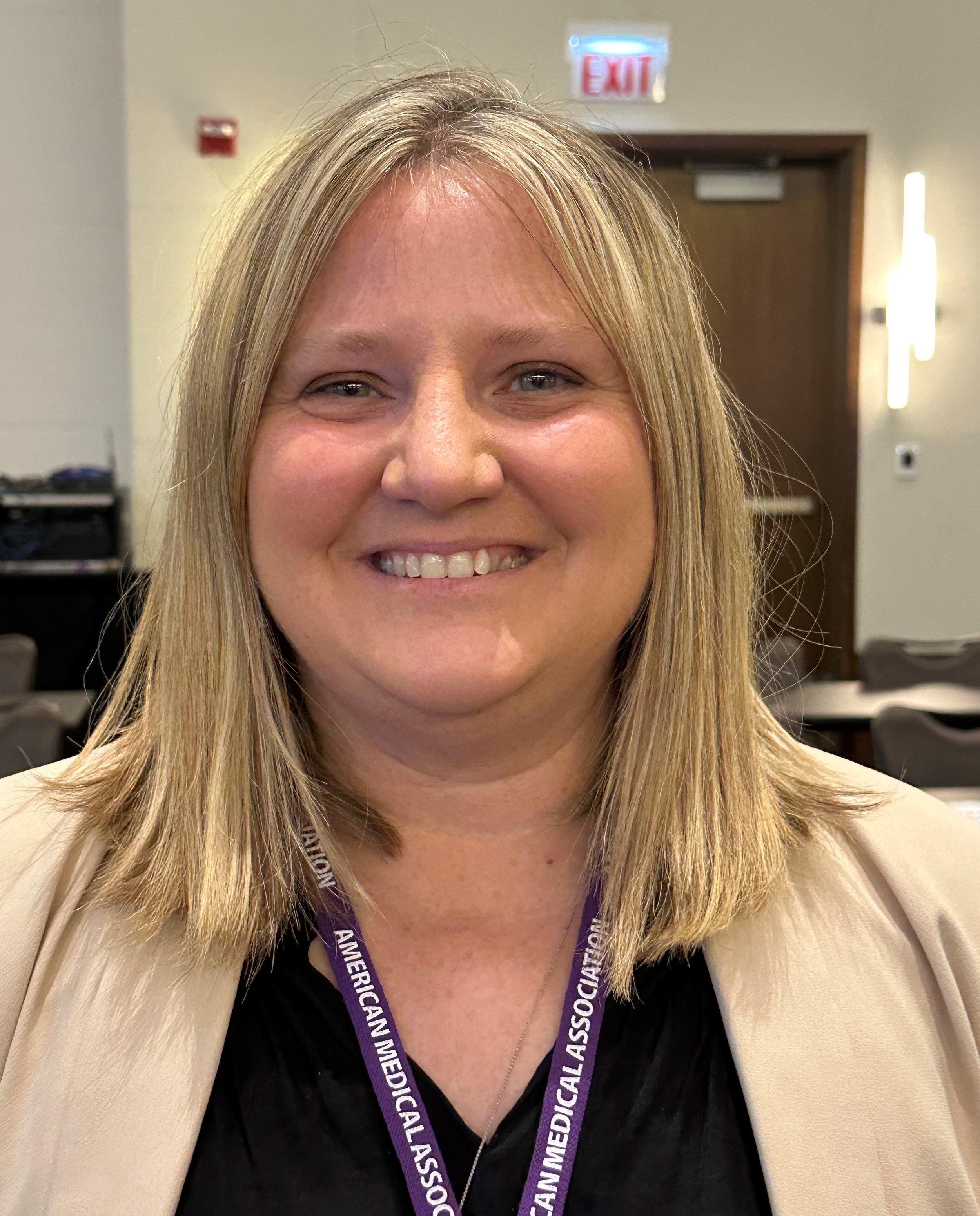
Becky Dolan